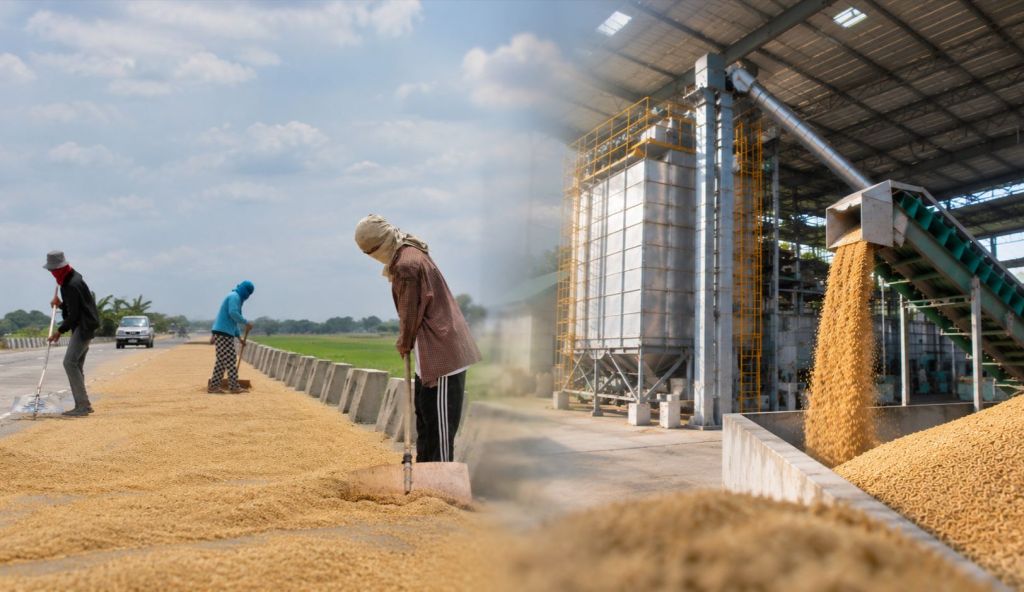
In the previous blog, October’s Golden Fields: The Work Behind the Harvest Season, I shared the beauty of harvest season and the hard work of Filipino farmers in bringing palay from the fields to the market. Today, was reminded once more that not even all the work is finished when the palay has left the fields.
Farmers still have to dry the grains and with that come the challenges that the weather presents. Under the afternoon sun, the palay is laid and turned with hopeful prayers that the skies would remain clear. But a passing rainstorm can put their hard work at risk, and force them to collect their palay before it is soaked in water. For others, they use mechanical dryers as a more reliable option when faced with unpredictable weather.
It makes me realize that drying palay is not just about removing moisture from the grains. It is also about making the most of the harvest after months of hard work.
Both methods have their part in rice farming. Sun-drying is a time-tested tradition passed down from previous generations while mechanical drying offers more control over the process.
But aside from the difference they make in terms of drying the harvested palay, I wonder which method is better in terms of preserving their quality while keeping costs in check.
Why Drying Matters
I used to think that the drying of palay is an ordinary step in the rice production process. And that it was something that was not often given a second thought by farmers. But the more I learned about the process of drying, the more I understood just how much it contributes to the final quality of rice.
It turns out that freshly harvested palay has anywhere from 20% to 25% moisture. Which means that it cannot be stored for long periods of time unless they have undergone some form of drying. Usually, they need to be dried until the moisture content is only at 14%, in order to avoid molding, discoloration, and decay.
But the process of quickly and forcefully drying the grains can also lead to the formation of small cracks within the kernel of each grain. Which can lead to more loss in terms of quantity when they break after being milled. After all the effort put into producing rice, having it turn out lower in value because of poor drying is something no farmer would want to risk.
It made me realize just how much work goes into not only bringing the palay to the fields, but also dealing with them after they have been harvested.
The Familiar Way: Sun-Drying
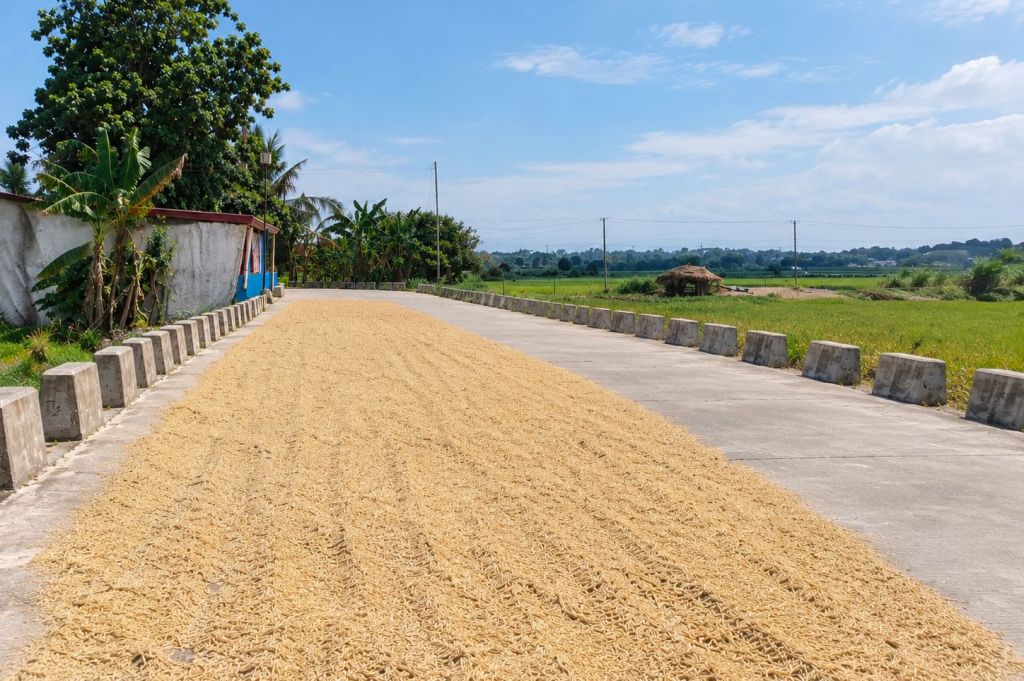
The sight of palay laid out to dry under the hot afternoon sun is not unfamiliar to me. Its practice has been time tested and for many farmers it remains a staple in the process of rice production. I know that the method is simple and cost-effective for the ones who have limited resources.
The process only involves laying the grains of palay out on tarpaulins or clean concrete, and turning the grains at regular intervals to ensure that it is uniformly dried. But the sight of workers laboring beside their harvest is not only interesting to observe. It also reminds me that the process of drying is something that requires constant attention and effort on the part of those involved.
They need to be alert and constantly check on the palay being turned at regular intervals. And not just the turning. The conditions where the drying takes place are also something that are difficult to monitor. Especially when we only have to consider the unpredictability of the weather.
Imagine spending the morning spreading your harvest under a clear sky, only to see dark clouds gathering in the afternoon. There is no time to waste. Farmers must gather and move the palay to a dry place before the rain arrives. When there is a large amount to handle, even a short shower can become stressful.
But I understand why many farmers continue to pursue sun-drying. It is a more cost-effective method, especially when they do not have the means to invest in a mechanical dryer.
However, their reliance on the sun and available space comes with difficulties of its own. Excess heat can impact the quality of the grain, as well as the uniformity of the drying process, if not done carefully.
Sun-drying is something ordinary to us who may only pass by and observe the grains of palay being dried. But to the ones who lay the grains out for drying, it involves patience and much hard work.
When the Weather Gets in the Way
One of the biggest problems of sun-drying is that farmers have little to no control over the weather. A couple of hours of rain can interrupt the process of drying, forcing farmers to move their palay and further delay the process.
I can imagine how frustrating and tiring it must be to spend hours and even days drying their palay, only to be forced to gather it up and move it somewhere else because of an incoming storm. The physical labor is exhausting on its own, and other responsibilities as well. Especially when many farmers are also doing their harvest at around the same time.
They would need space to spread their harvest. And the only places that can accommodate that are road sides and open concrete area. But they are often not the easiest or most reliable options.
These are some of the reasons why farmers and cooperatives have turned to the option of mechanical drying as a more controlled and reliable option.
The Rise of Mechanical Drying
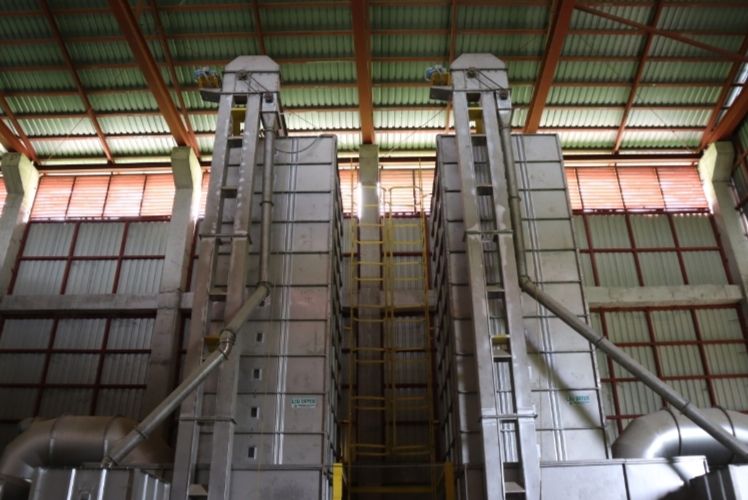
Source: PHilMech RCEF
Modern day cooperatives and milling companies have taken advantage of the option of mechanical drying. Instead of turning the grains on tarpaulins or concrete, farmers can simply deposit their palay into large machines that circulate the heated air around the grains, thus drying it. Mechanical dryers offer more control over the drying process, in terms of temperature and other factors.
The most important thing about mechanical drying, in my opinion, is that it offers a reliable and controlled environment for the grains of palay to dry. Aside from eliminating the risk of rain interfering with the process, it has been proven that proper drying can help retain the quality and integrity of each grain, reducing losses during the milling process.
Of course, mechanical drying is not without its problems. For the ones who do not have access to a mechanical dryer, the equipment required to invest in comes at a great cost. And for those who do use a cooperative’s mechanical dryer, they face the problems of scheduling their slot in the dryer for the time being. With prices going up, a cooperative’s service is not something every farmer would be able to afford.
Especially for a small-scale farmer who is already paying for fuel, seeds, and fertilizers, these additional costs matter. Saving time and reducing weather-related risks are valuable, but the service must still be affordable.
That is why I do not think the answer is simply to replace sun-drying with machines. Both methods have a place in our farming communities. What farmers need is access to options that suit their harvest, budget, and circumstances.
Which Method Makes More Sense
When I think of how both methods are similar and different from one another, it boils down to the matter of cost versus control. Sun-drying is more cost effective when both the space and weather allow for it. Mechanical drying offers more control over the drying process, but comes with additional cost.
Neither method ensures quality rice on its own. Controlling the conditions during the drying process and proper care of the grains during the entire process of rice production are essential to ensuring a good output.
I think the creation of affordable drying facilities would benefit more farmers, especially small scale ones, who do not have the means to invest in mechanical drying. Access to communal drying machines and moisture testing equipment would greatly benefit many farmers during harvest season.
For me, the work of farmers after their hard work has paid off in reaping season comes with as much importance as the other stages of rice production. Getting the rice on the table involves more than just growing it and waiting for the right time for harvesting.
It involves the decisions that are made afterwards, including where to dry the grains, how to protect it from rain, and whether the money it will cost for a mechanical dryer is worth it. By the time the rice reaches our kitchens, the hard work of farmers has already been done. But the process of cooking and enjoying that meal should not forget about the effort farmers put in to ensuring their hard work pays off in good rice.
The next time I walk by the roadside and see the grains of golden palay laid out to dry, I will see more than just the palay I saw before. I will see the work of farmers in ensuring that their hard work has paid off, and that their harvest is preserved and will fetch a decent price at the market.
And the beginning of that journey, is the step we have started writing about these blogs.
Sources:
1. PhilRice (Philippine Rice Research Institute) – National guidelines on wet-season management and post-harvest moisture targets. Visit PhilRice
2. PHilMech (Philippine Center for Postharvest Development and Mechanization) – Research on mechanical grain dryers, milling efficiency, and loss reduction. Visit PHilMech
3. IRRI Rice Knowledge Bank – Technical documentation on moisture migration, thermal stress, kernel fissuring, and head-rice recovery. Visit IRRI Drying Guide



Leave a Reply