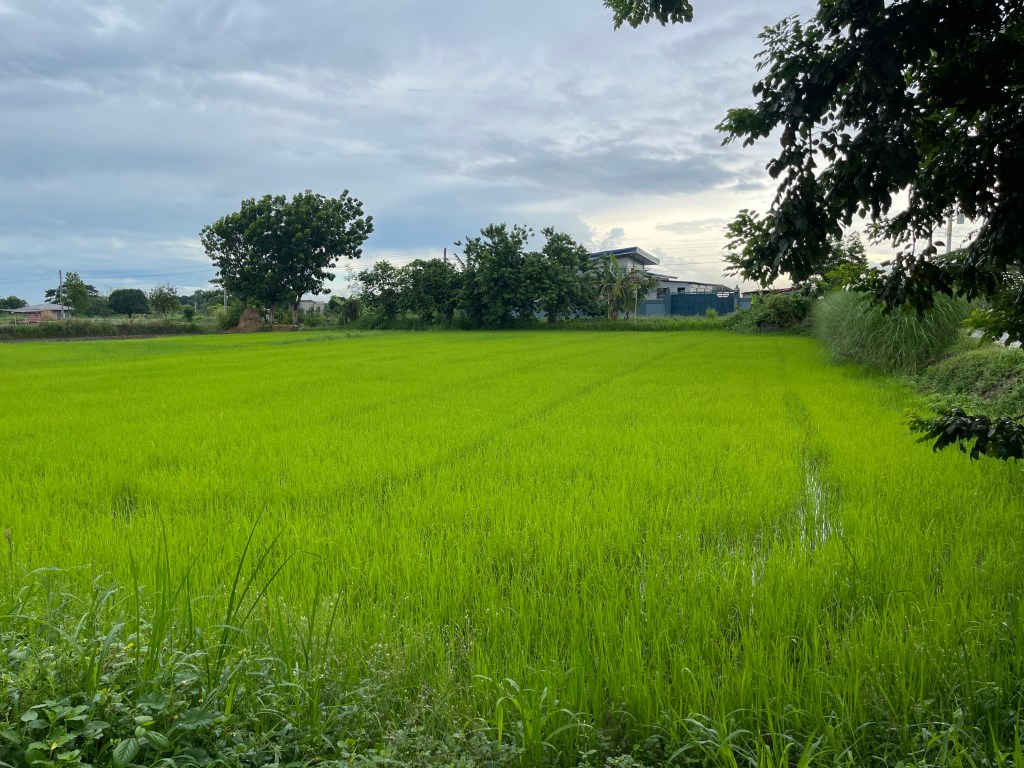
By interviewing a couple of farmers from Floridablanca, Pampanga, I have drawn a picture in my head of how the farmers can benefit from each of the methods of rice planting. How the 2 methods are compared in terms of production cost and the benefit of rice yields.
Methods of Rice Planting
Currently, there are 2 planting methods being practiced by farmers in Floridablanca, the dry seeding and the transplanting method. The dry seeding is almost the same as from my previous post https://philippineagriculture.com/2024/07/11/incorporating-direct-dry-seeding-panggas-for-sustainable-farming-in-the-philippines/ except for the compaction used in Sultan Kudarat where they lower the voids in the soil by mildly compacting it.
When Do They Use Transplanting?
This is the most common method of planting rice and the most recommended one. If the farmers has adequate irrigation water supply, this is the recommended one to use.
Transplanting method involves the following in the start of planting.
- Land Soaking (To soften the soil and soak the remaining palay ang grasses remaining.
- Land Preparation (Cultivation of and clearing of the planting area)
- Seedbed Preparation (For the seed to germinate and grow)
- Seed Pulling (In preparation for transplanting)
- Transplanting (Where the young palays are transplanted from seedbed to their permanent location.
In the estimation of water supply, land soaking is the stage that consumes the largest amount of discharge to the field, hence the main component in estimating the duration of the staggered scheduling.
When Do They Use Direct Seeding?
Opposite to the above, when the irrigation water supply are either low, late for distribution due to some factors and deemed the land soaking to be impractical, this is what they use.
Direct seeding does not require land soaking and so needed little to none until before crop maintenance. The following are what the consists of the process of direct seeding:
- Land Preparation
- Seed Broadcasting (Either manual or using drum seeder)
- Mixing of seeds with the soil
- Leveling
After leveling, they will just wait for the palay to sprout out of the soil. Spraying pre-emergence herbicides to prevent grass seeds to grow. And then they will need water during the crop maintenance stage.
Production Cost Comparison
For the production, there are 2 main factors. First is the water supply, where as mentioned, the transplanting requires more and on time water delivery, and the next one is the labor cost.
Labor cost for direct seeding tends to be much lower than the transplanting method.
For the current price of herbicides, pesticides, fertilizers and seeds, here are the cost comparison for palay production for 1 hectare of land.
| Transplanting | Direct Seeding | |
|---|---|---|
| Total Production Cost | ₱ 30,000.00 | ₱ 26,000.00 |
The following are the scenarios for the above comparison:
- No water pump operation was used, only the gravity irrigation from the canals
- The transplanting used a mechanical hand transplanter rented at ₱8,000.00/ha.
Rice Yield Comparison
Now for the yield comparison, we will be talking about the fresh harvest. Meaning that the harvested palay are weighed.
Usually, the farmers in Floridablanca and other municipalities of Pampanga directly sells their harvest from the field. There are no post harvest processing happening in the farmers’ side except for the few who safe keep a small portion of their produce for their own consumption. The traders, who also own the harvesters will pay the farmers upfront upon harvest and they will shoulder all the processes such as hauling and drying and then sells directly to bid rice mills.
For the average comparison of harvest yields, see the table below:
| Transplanting | Direct Seeding | |
|---|---|---|
| Average Total Yield per hectare | 120 cavans | 100 cavans |
The data gathered here are from the interview with two officials of Irrigators Associations from Porac-Gumain Rivers Irrigation System in Pampanga.
The cavans are the sack of palay (rice) weighing 50 kilograms. From this we can estimate the net income of the farmers per hectare. As of 2023 and early 2024, the farmers in the second district of Pampanga have sold their palay for an average of ₱23.00 per kilogram. Another factor is that these interviewed farmers owned the lands that they tilt so no taxes or rents are paid to other people.
So for the computation of gross and net income, refer to the table below:
| Transplanting | Direct Seeding | |
|---|---|---|
| Gross Income (₱) | 138,000.00 | 115,000.00 |
| Production Cost (₱) | 30,000.00 | 26,000.00 |
| Net Income (₱) | 108,000.00 | 89,000.00 |
Conclusion
As we can see, there is a big difference in the net income for transplanting and direct seeding. Yes the transplanting is more expensive in the production cost but also yields a higher income result.
It can also be said that the capital is not just the factor, because if it is, then all the farmers will definitely practice the method that will yield higher income. It’s because there are other factors considered, one of the main one is the water supply.
The farmers can also not just resort in using water pumps to increase the irrigation water supply because it will also incur higher production cost.

 Philippine Agriculture
Leave a comment